Aptera Solar EV Test: What 4.23–4.75 kWh/Day Actually Means for Miles
Aptera says TÜV Rheinland measured 4.23–4.75 kWh/day flowing into its solar EV's battery.
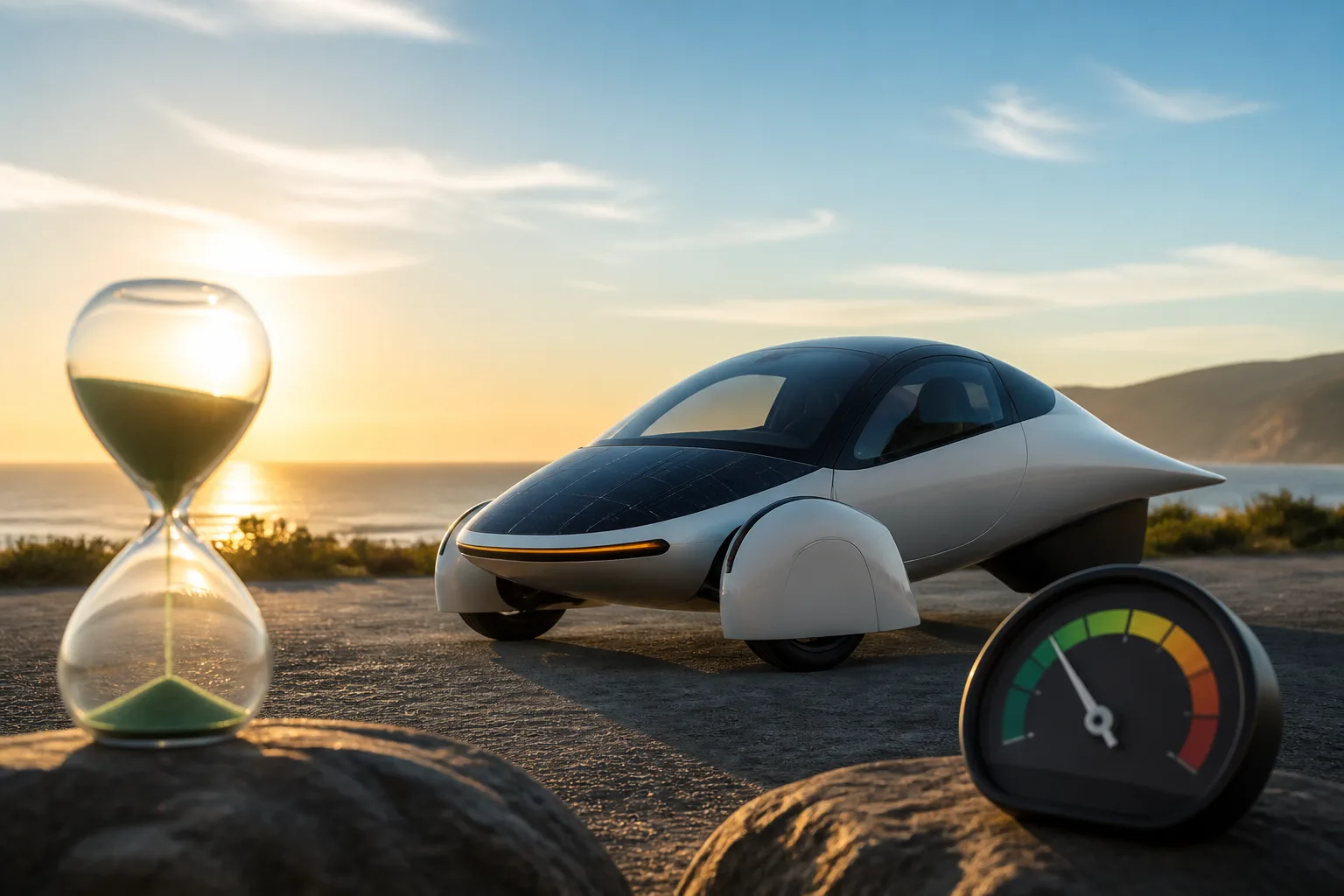
Aptera announced that TÜV Rheinland independently measured 4.23 to 4.75 kWh of solar energy delivered into its solar EV's battery pack over three days in July, at a Southern California test site. That's the confirmed, official fact: a measured energy quantity, on a single validation vehicle, over three days, in one location, during clear July weather.
What the number means for driving range is a separate, softer calculation layered on top by Aptera itself — and the distinction matters if you're deciding whether this vehicle could realistically replace plug-in charging for your commute.
The Measured Energy vs. the Estimated Miles
According to Aptera's release, the three test days produced 4.23 kWh, 4.40 kWh, and 4.75 kWh flowing into the battery under different parking and repositioning scenarios that Aptera requested TÜV Rheinland use. Aptera then translated those figures into roughly 42, 44, and 47 miles of estimated solar range, using its targeted efficiency of 100 watt-hours per mile.
That efficiency figure is a target, not a measured value from this test. Aptera's own release states the mileage figures are estimates rather than measured driving range. So the kWh numbers are TÜV's independent measurement; the mile numbers are Aptera's arithmetic on top of that measurement, built on an assumption about how efficiently the production vehicle will actually consume energy per mile. A commentary from At the Charger makes the same point: the report establishes what happened on those three days with one test sample, and doesn't by itself establish how many miles a production vehicle will travel per kilowatt-hour.
Why Three Days in One City Isn't a Year-Round Guarantee
Aptera's release explicitly ties these results to clear July conditions in Carlsbad, and states that actual daily solar contribution will vary with weather, geographic location, parking orientation, and season. That caveat comes directly from the company, not from outside skeptics.
Practically, that means a Chicago winter, an overcast week, or a vehicle parked in a garage or shaded lot could plausibly deliver meaningfully less solar energy than what was measured in this test — though the sources reviewed don't quantify that gap. Electrek's coverage and other outlets frame the result as a favorable-conditions snapshot, not a year-round average. Aptera also states the on-site witnessing service does not constitute certification of the vehicle or compliance with any regulatory standard — it's a measurement exercise, not a government or industry certification.
What This Realistically Covers for a Commute
If your round-trip commute is in the ballpark of the 42–47 mile range Aptera calculated, this test offers a data point suggesting solar alone might cover a meaningful share of daily driving under similarly sunny, favorable conditions — a takeaway echoed in commentary from Electrek and The Cool Down around roughly 30-mile daily commutes. But among the sources reviewed, there's no production-fleet data, no multi-season data, and no data from climates outside Southern California. Treat the 42–47 mile figures as an upper-bound estimate under good conditions on one test vehicle, not a guarantee for your specific location or driving pattern.
Should You Still Plan for Home Charging?
Yes. Nothing in this test eliminates the value of a home Level 2 charging setup as backup for cloudy days, winter months, or longer trips. If your home's electrical panel can't support a new EV circuit, Schneider Electric has reportedly introduced a workaround product aimed at avoiding a full panel upgrade for EV charger installation — worth researching if a panel upgrade quote looks costly, though specifics on amperage limits and eligibility should be confirmed directly with an installer before assuming it fits your situation.