EV Prices Are Falling While the Average New Car Tops $50K: Here's Why That's Not a Contradiction
The average new-vehicle transaction price topped $50,000 in August even as EV prices fell 2.7% and incentives rose to 12%.
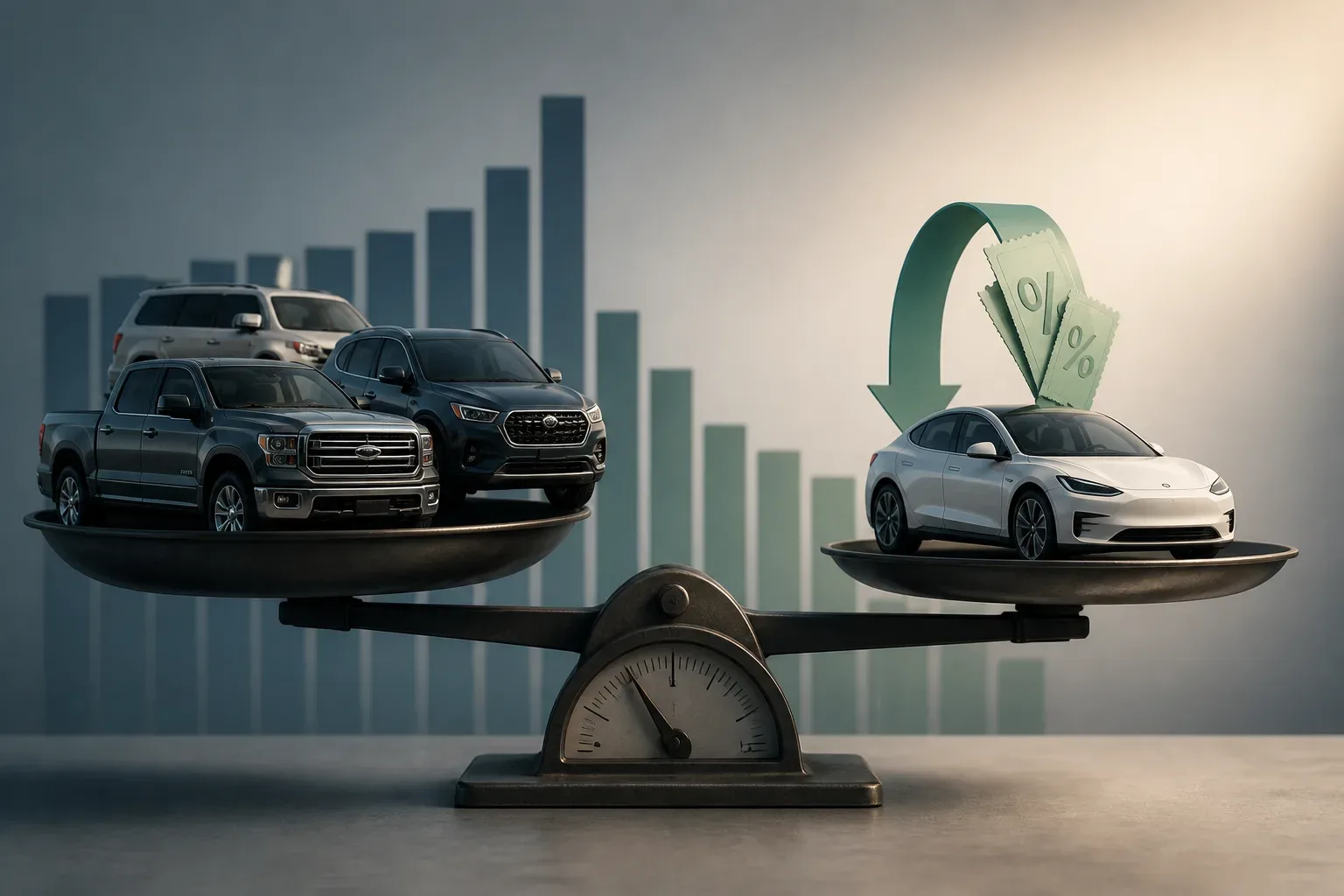
If you've seen headlines saying EV prices are dropping right alongside headlines saying the average new car now costs more than $50,000, you're not misreading anything — both are true at the same time, and for different reasons.
What actually happened in August
The average new-vehicle transaction price in the US climbed back above $50,000 in August, landing at $50,089 — a 1.9% increase from August of the previous year, according to CBT News, which cites Kelley Blue Book data. That was the first time the industry-wide average crossed that threshold since December, the report states.
At the same time, the average transaction price for EVs specifically fell to $54,813, down 2.7% year-over-year, the same report states. EV incentives also grew, reaching as much as 12% of the purchase price in August. So while EVs are still priced above the overall market average in dollar terms, they moved in the opposite direction: down, with more discounting layered on top, while the broader market average moved up.
Why the overall average keeps climbing
The explanation CBT News offers for the industry-wide number is about what people are actually buying, not just what things cost. Higher-priced segments — midsize SUVs and full-size pickups are cited specifically — are pulling the industry average upward because they represent a larger share of total sales, per CBT News. That's a vehicle-mix effect: even if no single vehicle's price changed at all, the average would still rise if buyers shifted toward pricier categories.
The report also points to the arrival of 2027 model-year vehicles as a factor pushing transaction prices higher in the second half of the year. This is presented in the reporting as a contributing factor rather than something independently verified against a separate dataset — the framing here is explanatory, not a standalone confirmed cause.
CBT News additionally frames the affordability side of this as cutting both ways: rising overall prices are described as pushing some buyers toward lower-cost options, which is offered as part of the same broader affordability story rather than as a separately confirmed behavioral finding.
Why EVs are moving in the opposite direction
EVs sit in a different pricing lane. Their average transaction price fell even as the rest of the market rose, and incentives on EVs grew alongside that decline. CBT News frames this divergence as potentially giving EVs room to position themselves against pricier gas-powered models — since EVs are getting relatively cheaper and more heavily discounted while much of the rest of the market gets more expensive. That's presented as an interpretation in the reporting, not a confirmed shift in buyer behavior or market share; no data on resulting EV sales volume or share change is included in the sourced reporting.
What this means if you're shopping right now
The practical takeaway is that "average new car price" and "EV price" are answering different questions. The $50,089 industry figure tells you what a typical buyer across all vehicle types is paying, weighted heavily by which segments are popular right now — it's not a per-vehicle price tag you should expect to see on any specific car. The EV figure, at $54,813 average with incentives up to 12%, tells you EVs remain priced above the industry-wide average in raw dollar terms, but the direction of travel — falling prices, rising incentives — is the opposite of the broader market's.
If you're cross-shopping an EV against a comparably equipped gas vehicle, the incentive figure is one factor worth weighing alongside the sticker price, since a 12% incentive on an EV is a meaningfully large discount relative to the overall industry's incentive levels. What isn't established in the sourced reporting is how much that incentive actually closes any specific price gap against a comparable gas vehicle, how long this incentive level will hold, whether it varies significantly by brand or model, or how it compares to incentives on the higher-priced segments driving the overall average up — those specifics remain unknown among the sources reviewed.